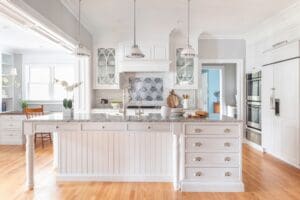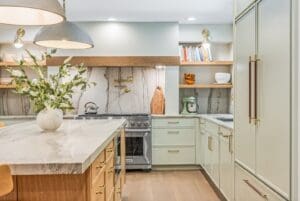


If you have ever looked at a cabinet sample in a showroom and then thought it looked different in your own kitchen, lighting may be the reason. Understanding how lighting affects cabinet color can help you choose a finish that looks right throughout the day.
The same cabinet door can look warmer at night and brighter or crisper during the day. The type of light bulb, the direction your windows face, the time of day, and even the sheen of the finish can change the color you see. Natural wood also changes gradually as it is exposed to light.
Key Takeaways
- Warm bulbs, usually 2700K to 3000K, give off a warmer, more yellow light.
- Higher color temperatures, such as 4000K and above, produce cooler, bluer light.
- North-facing light is usually cool and soft. South-facing light tends to be stronger and warmer. East- and west-facing rooms change more throughout the day.
- Walnut generally becomes lighter with time. Maple develops a warmer honey tone. White oak warms slightly, while cherry becomes darker and richer.
- Kountry Kraft can create a custom stain match for new cabinetry based on an existing sample. Because wood and finishes change with age and sunlight, an exact match to older cabinetry may not always be possible.
At Kountry Kraft, we have built custom cabinetry in Newmanstown, Pennsylvania, since 1959. When a cabinet finish looks different after it is installed than it did on a sample, the lighting in the room is often part of the reason. Understanding a few basic lighting terms can make choosing a cabinet finish much easier.
How Does Light Change the Color You See?
Think of light as a filter over everything in your kitchen. Different types of light have slightly different colors, and your cabinetry reflects some of that color back into the room.
Warm Light vs. Cool Light
Light bulbs have a color temperature measured in Kelvin, shown as a number followed by the letter K. You do not need to understand the science behind Kelvin to use it when choosing lighting. Lower numbers, usually around 2700K to 3000K, create a warmer, slightly yellow light similar to traditional incandescent bulbs. Higher numbers create cooler light. ENERGY STAR describes 4000K and above as cooler, bluer light. That means the same cream-colored cabinet could look warmer under a 2700K bulb and cleaner or cooler under a higher-Kelvin bulb.
How Accurately Does a Bulb Show Color?
Another number you may see on a light bulb package is CRI, which stands for Color Rendering Index. CRI tells you how accurately the light allows you to see colors. The scale goes up to 100. A higher CRI generally means colors will look more true to life under that light. A CRI of 90 or higher is a good number to look for when cabinet color is important. Even bulbs with similar specifications can look a little different, so it is worthwhile to test one bulb before replacing all the lighting in a kitchen.
Why Light and Dark Cabinet Colors React Differently
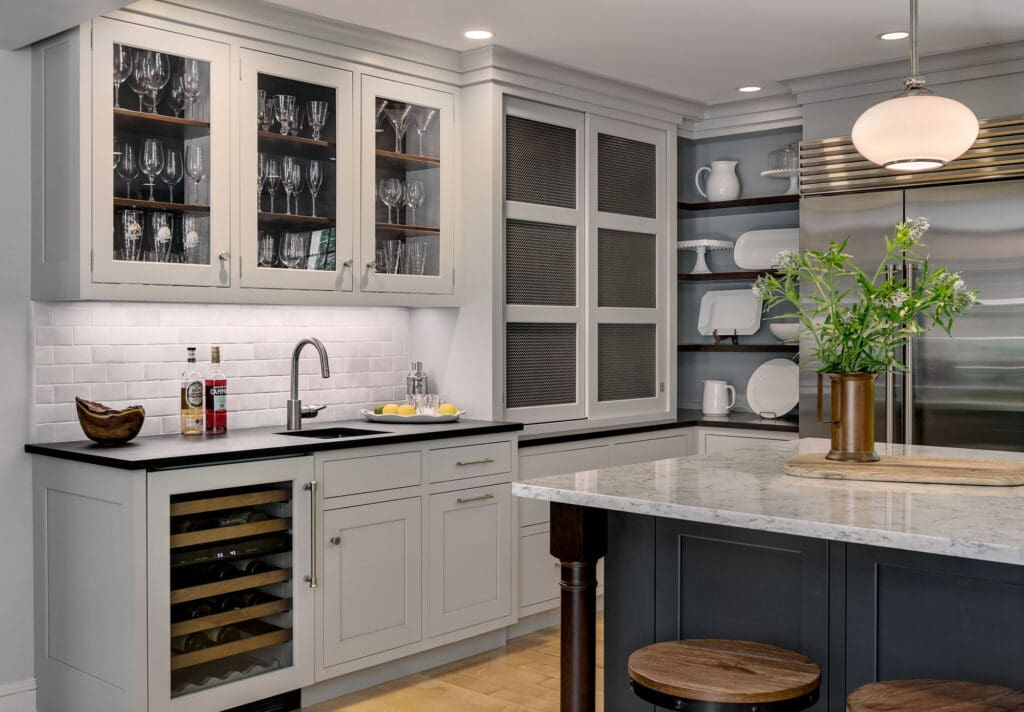
Paint manufacturers may also provide something called LRV, or Light Reflectance Value. LRV is a scale from 0 to 100 that tells you how much light a color reflects. A very light color has a high LRV and reflects more light back into the room. A dark color has a lower LRV and absorbs more light. This is why a deep color such as navy can look especially dark in a room with limited light. Kountry Kraft’s examples of navy colored cabinets show how the same color family can take on a different character depending on the room, surrounding finishes, and available light.
Which Way Do Your Windows Face?
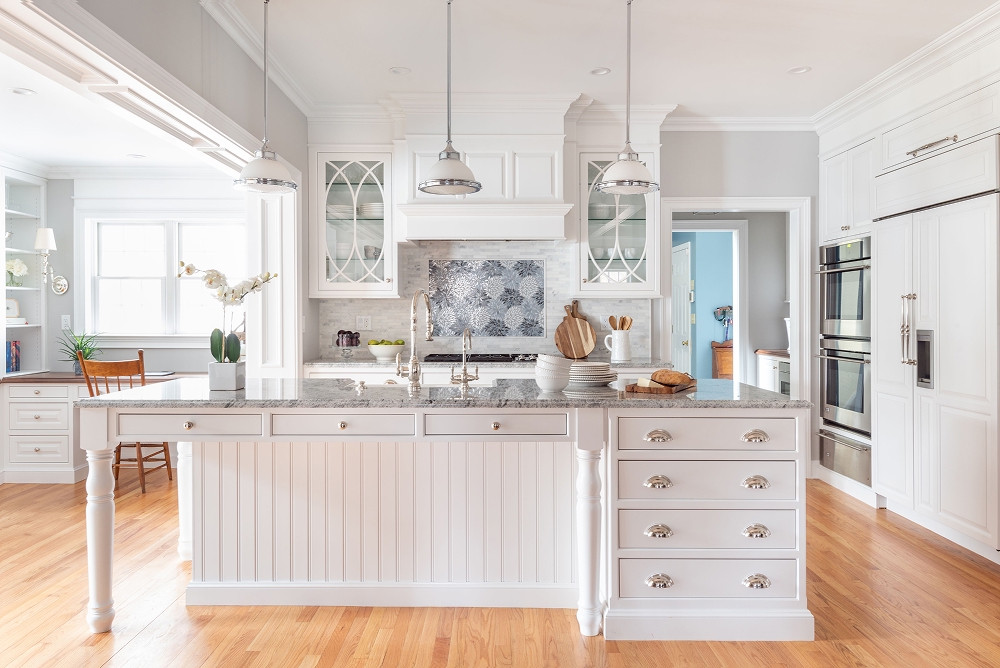
Natural daylight is often the largest source of light in a kitchen. The direction your windows face can change how cabinet colors appear.
North-Facing Kitchens
North-facing rooms usually receive soft, cooler light throughout the day. Cool undertones, including gray and blue, may become more noticeable. Warm whites can also look slightly less warm than they do on a sample. If you are considering a warm white or cream cabinet finish, look at the sample in the room before making your final decision.
South-Facing Kitchens
South-facing rooms generally receive stronger, warmer sunlight. That warmer light can give whites and other pale colors a slightly golden or amber appearance.
East- and West-Facing Kitchens
These rooms tend to change the most throughout the day. East-facing rooms receive warmer light in the morning. The light becomes cooler as the day continues. West-facing rooms usually start with cooler light and become much warmer in the late afternoon. For that reason, a cabinet color you love at 9 a.m. should also be viewed again later in the day. Tip: Natural light also changes with the seasons. Winter light can look different from summer light, so the same cabinet finish may appear slightly different at different times of year.
What Color Temperature Is Best for Kitchen Cabinets?
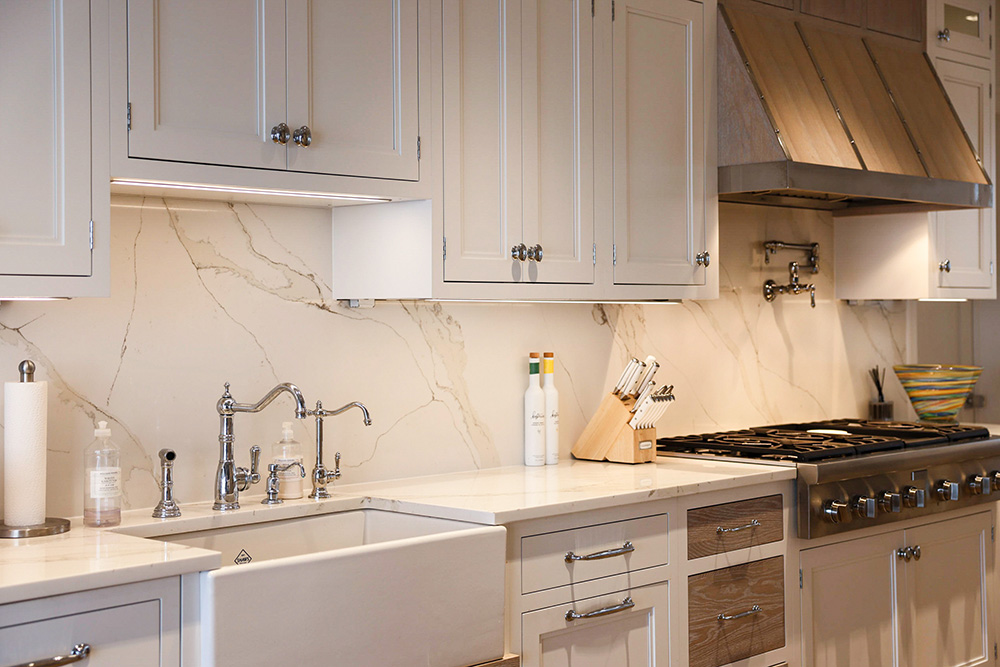
There is no single color temperature that works best with every cabinet finish. For kitchens, warm white bulbs (2700K to 3000K) and neutral white bulbs (around 3500K) are all common choices. Which one looks best depends on the cabinet finish, the other materials in the room, and your preference for warmer or cooler light. Consistency can be even more important than choosing one particular number. If your recessed ceiling lights are one color temperature and your under-cabinet lighting is another, the upper and lower cabinets can appear to be two different colors. This is sometimes the reason homeowners think their white cabinets look yellow under under-cabinet lighting. Before changing anything else, check whether all of the bulbs and fixtures are producing the same type of light. Tip: Look for bulbs with good color rendering and test one before replacing the lighting throughout the room.
Why Do My White Cabinets Look Yellow?
White cabinetry can appear yellow for several reasons.
The most common are:
- warm-colored light bulbs
- warm surrounding materials, such as cream walls or beige countertops
- a finish that has changed color with age
Start with the easiest possibility. Replace one warm bulb with a cooler bulb with good color rendering and look at the cabinets again. If the yellow appearance changes, lighting is likely contributing to what you are seeing. If the cabinets still look warmer than expected, look at the materials around them. A warm backsplash, countertop, wall color, or flooring can make a clean white cabinet appear creamier by comparison. Some older finishes can also change over time. Oil-based paints and clear finishes may develop a warmer amber tone as they age. Water-based finishes generally resist this type of yellowing better.
How Does Sheen Change the Way a Cabinet Finish Looks?
Sheen simply describes how much light a surface reflects. A matte finish reflects less light. It has a softer appearance and does not show reflections as strongly. A high-gloss finish reflects much more light. It can pick up reflections from windows, pendant lights, countertops, and other nearby surfaces. Because high-gloss finishes reflect so much light, they can also make small variations on a surface easier to see. Kountry Kraft offers both ends of this spectrum through the Synchronicity Collection. You can see the difference in Kountry Kraft’s guide to High Gloss & Super Matte Cabinetry. Super Matte finishes have a very low sheen and softly absorb light, while High Gloss finishes create a much more reflective surface. The choice can make a noticeable difference in how cabinetry looks as lighting changes throughout the day.
Why Late-Day Sun Can Show More Detail
Cabinet finishers often inspect a surface by shining light across it at a low angle. This creates small shadows that make grain, texture, sanding marks, or other surface details easier to see. Late-afternoon sunlight can do the same thing in your kitchen. When sunlight travels across a cabinet door from the side, the wood grain and surface texture can suddenly become much more noticeable. That does not necessarily mean the cabinetry has changed. The angle of the light has changed what you can see.
Do Stained and Painted Cabinets React to Light Differently?
Yes. Paint creates an opaque surface, which means you see the paint color rather than the wood underneath. Lighting can make that paint color appear warmer, cooler, lighter, or darker. Stain works differently because it allows the wood grain to remain visible. What you see is a combination of the stain color, the natural color of the wood, and the grain pattern. Different wood species also accept stain differently. Oak and walnut generally take stain more evenly, while maple and cherry require careful preparation to create a consistent appearance. Kountry Kraft offers a wide range of custom wood stain colors, and examples of wood stained cabinets show how stain can highlight the natural character of different woods. Glaze creates another layer of color and detail. It can settle into corners, profiles, and other details in the cabinet door and make those areas more noticeable. You can see examples and learn more about Kountry Kraft’s glazed cabinets. The clear protective finish applied over wood can also affect the final color. Water-based clear finishes add very little additional color, which can help pale woods such as maple remain closer to their natural tone. Oil-based finishes add warmth and can become increasingly amber as they age.
How Do White Oak, Walnut, Maple, and Cherry Cabinetry Change in Light?
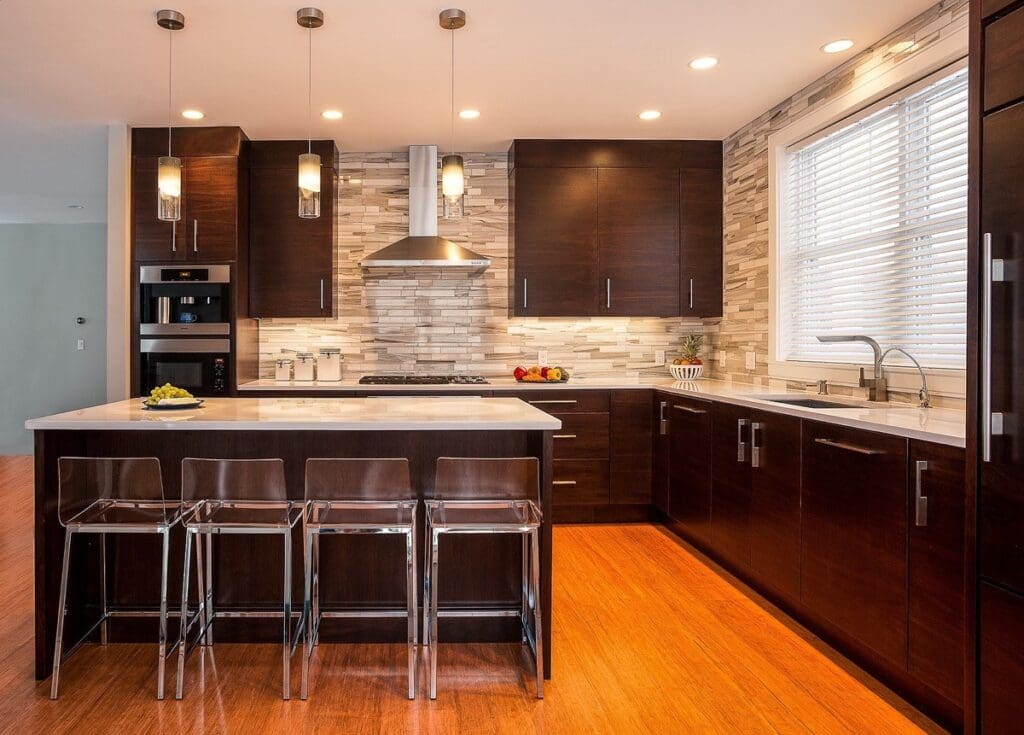
Natural wood changes as it is exposed to light and air. The most noticeable change often takes place during the first year. In general, lighter woods tend to become warmer, while some darker woods become lighter. White oak, walnut, and maple are among Kountry Kraft’s most requested wood species. Kountry Kraft also creates cabinetry from other species, including cherry, by request.
Does White Oak Change Color Over Time?
Yes, although the change is usually subtle. White oak gradually becomes a little warmer and more golden as it is exposed to light. Some of the yellowing seen on older white oak cabinetry may come from an oil-based clear finish rather than the wood alone. Those finishes can become more amber with age. A water-based clear finish generally keeps white oak closer to its original color.
Does Walnut Lighten Over Time?
Yes. Walnut often begins as a rich chocolate brown and gradually becomes a softer brown as it is exposed to light. Honey-colored tones may also become more visible in the grain. The change is usually easiest to see in areas that receive a lot of sunlight.
Does Maple Change Color Over Time?
Yes. Pale maple gradually develops a warmer, honey-colored tone with exposure to light. An oil-based clear finish can add even more warmth as it ages. A water-based or non-yellowing finish can help maple remain closer to its original pale color.
Does Cherry Darken in Sunlight?
Yes. Cherry changes more noticeably than many other woods. Fresh cherry can begin with a lighter pinkish tone and gradually deepen into a rich red-brown. That process can begin within weeks of exposure to light. For this reason, a new cherry cabinet door may initially look considerably lighter than cherry cabinetry that has been in a sunny room for several years.
How Do You Match New Cabinets to Existing Ones?
Kountry Kraft can create a custom stain match for new cabinetry using a sample from your existing cabinets. A cabinet door or drawer front is usually a good sample because it gives the finishing team an existing color to work from. You can learn more about Kountry Kraft’s custom stain matching process. The goal is to come as close as possible to the sample. An exact match may not always be possible when the existing cabinetry has been exposed to years of sunlight. The reason is simple: wood continues to change over time. The wood itself may have become lighter, darker, or warmer. An older clear finish may also have developed an amber tone. Those changes may not happen evenly throughout the room.
New cabinetry begins with new wood and a new finish, so it will also begin changing naturally once it is installed.
A few steps can help create the best possible match:
- Choose your sample carefully. A cabinet door exposed to strong sunlight may already look different from a drawer on a shaded wall. Select the sample that best represents the cabinetry the new cabinets will sit beside.
- Compare the matched sample in your own room. Look at it beside the existing cabinetry in morning light, afternoon light, and artificial light.
- Allow the new wood to age naturally. The color will continue to change after installation.
- Consider the full cabinet run. When existing cabinetry has changed significantly with age and sunlight, adding a complete matching section may look more natural than replacing one individual door.
On-site touch-ups are handled separately. After installation, Kountry Kraft recommends working with a local furniture refinisher when touch-ups are needed in the home.
How Should You Test Cabinet Samples at Home?
The best way to judge a cabinet color is to look at an actual sample in the room where the cabinetry will be installed. Photos and computer screens are useful for gathering ideas, but they cannot reproduce your home’s exact lighting. Place the sample upright where the cabinetry will be located and compare it with the countertop, flooring, backsplash, and surrounding finishes.
Then look at it several times:
- In the morning
- In late afternoon
- After dark with your kitchen lights turned on
Also test the bulbs you plan to use in the finished kitchen. You can even shine a flashlight across the cabinet surface from the side. This can help show how low-angle light may reveal wood grain, texture, and sheen. Finally, leave the sample in the room for several days. Seeing it during your normal routine can give you a much better sense of how the finish will look throughout the day.
For more help narrowing your choices, see our guide to choosing a color for painted kitchen cabinetry or explore Kountry Kraft’s cabinet colors and finishes.
Frequently Asked Questions
Why do my white cabinets look yellow?
White cabinets can look yellow because of warm light bulbs, warm surrounding materials such as cream walls, or an older finish that has become more amber with age. Try replacing one bulb with a cooler bulb with good color rendering first. If the cabinets still look yellow, compare them with the wall, backsplash, countertop, and other nearby colors.
What color temperature is best for kitchen cabinets?
There is no single color temperature that is best for every cabinet finish. Warm white bulbs (2700K to 3000K) and neutral white bulbs (around 3500K) are all common choices for kitchens. Choose the one that works best with your cabinetry and use the same color temperature consistently throughout the room.
Why does my cabinet look different than the sample?
Installed cabinetry covers a much larger area than a sample and is surrounded by your own flooring, countertops, walls, windows, and lighting. Window direction, time of day, artificial lighting, and cabinet sheen can all change how the color appears. For the most accurate comparison, look at a real cabinet sample in your kitchen at several times of day.
Does walnut lighten over time?
Yes. Walnut gradually changes from a rich chocolate brown toward a softer brown with honey tones as it is exposed to light. The change is often most noticeable in areas that receive more sunlight.
Does cherry darken in sunlight?
Yes. Cherry can change from a lighter pinkish color to a deeper red-brown as it is exposed to light. The change may begin within weeks. Kountry Kraft makes cherry cabinetry to order.
Can you match new cabinets to old ones?
Kountry Kraft can create a custom stain match for new cabinetry using a sample you provide, such as a door from your existing cabinets. Because wood and finishes naturally change with age and sunlight, an exact match to older cabinetry may not always be possible. On-site touch-ups are a separate service. After installation, Kountry Kraft recommends working with a local furniture refinisher for any touch-ups needed in the home.
See Cabinet Color in Your Own Light
Light is part of every cabinet finish you choose. Looking at a real sample in your own kitchen, under your own bulbs and at different times of day, gives you a much clearer picture of how that finish will look once the cabinetry is installed. Contact the design experts at Kountry Kraft or find a local authorized Kountry Kraft dealer to explore cabinetry colors, woods, stains, and finishes for your home.